Event branding is often judged first by how it looks. The colours, signage, styling, stage design and printed pieces all matter. But for a corporate event, conference or brand-led experience, branding has a larger job than presentation alone. It helps guests understand where they are, why the event matters and how they are expected to take part.
When planned properly, event branding supports the full guest journey. It can guide arrival, shape the atmosphere, reinforce key messages, create useful moments for participation and make the experience easier to remember afterwards. The strongest branded events do not simply place a logo across the room. They use every touchpoint with intent, so the event feels clear, connected and professionally aligned from the first invitation through to the final follow-up.
Event Branding Starts With the Guest Journey
Strong event branding begins before the room is dressed or the signage is installed. It starts with the path a guest takes through the event: the invitation they receive, the information they need, the way they arrive, the first thing they see and the moments that hold their attention once the program begins.
This matters because engagement rarely happens by accident. Guests are more likely to participate when the event feels easy to understand. Clear branding can signal what kind of experience they are entering, where they should go, what deserves their attention and how the event connects back to the organisation hosting it.
For a conference, that may mean carrying the event identity through registration, plenary spaces, breakout rooms, sponsor areas and delegate communications. For a gala dinner, it may mean using styling, lighting, table details and screen content to build a sense of occasion without losing the host organisation’s brand. For a launch, it may mean making the product story visible at every point where guests pause, interact or capture content.
The goal is not to cover every surface with a logo. It is to make the event feel coherent. When each guest touchpoint supports the same message and atmosphere, the experience becomes easier to follow, easier to engage with and easier to remember.
Make the Brand Easy to Recognise and Engage With
Guests should not have to work hard to understand the event environment. Good branding gives them visual cues they can recognise quickly, whether they are arriving at registration, finding a breakout space, approaching a sponsor area or looking for the next program moment.
This is where consistency becomes practical. Research-backed brand thinking often points to the value of distinctive brand assets, because recognisable colours, shapes, marks and cues help people identify a brand more easily. In an event setting, those cues need to be translated into the physical and digital experience without overwhelming the room.
Useful event brand touchpoints may include:
- arrival signage and directional wayfinding
- registration desks and check-in screens
- stage backdrops, lecterns and presentation templates
- digital screens, holding slides and sponsor loops
- menus, programs, name badges and printed collateral
- branded styling elements, florals, table details and lighting
- photo walls, media walls or content capture areas
The point is not to make every item identical. It is to make the event feel intentionally connected. When the brand is easy to recognise and the environment is easy to navigate, guests can spend less time working out what is happening and more time participating in the experience.
Turn Brand Moments Into Participation
The most effective branded events give guests something to do, not only something to look at. A logo wall may support visual consistency, but it does not automatically create engagement. Participation comes from moments that invite guests to respond, share, move, connect or make the event part of their own experience.
For event branding, this is where strategy becomes visible. A launch might use a hands-on product demonstration, a guided reveal moment or a content capture area that helps guests understand and share the product story. Well-planned product launch and brand activation events use these moments to move beyond presentation and create a clearer connection between the brand, the room and the audience.
At larger events, branded participation can also support networking, sponsor value and audience energy. A photo moment, interactive display, sponsor feature, audience prompt or themed installation works best when it has a reason to exist. It should connect to the event message, help guests engage naturally and give the host organisation something useful beyond decoration.
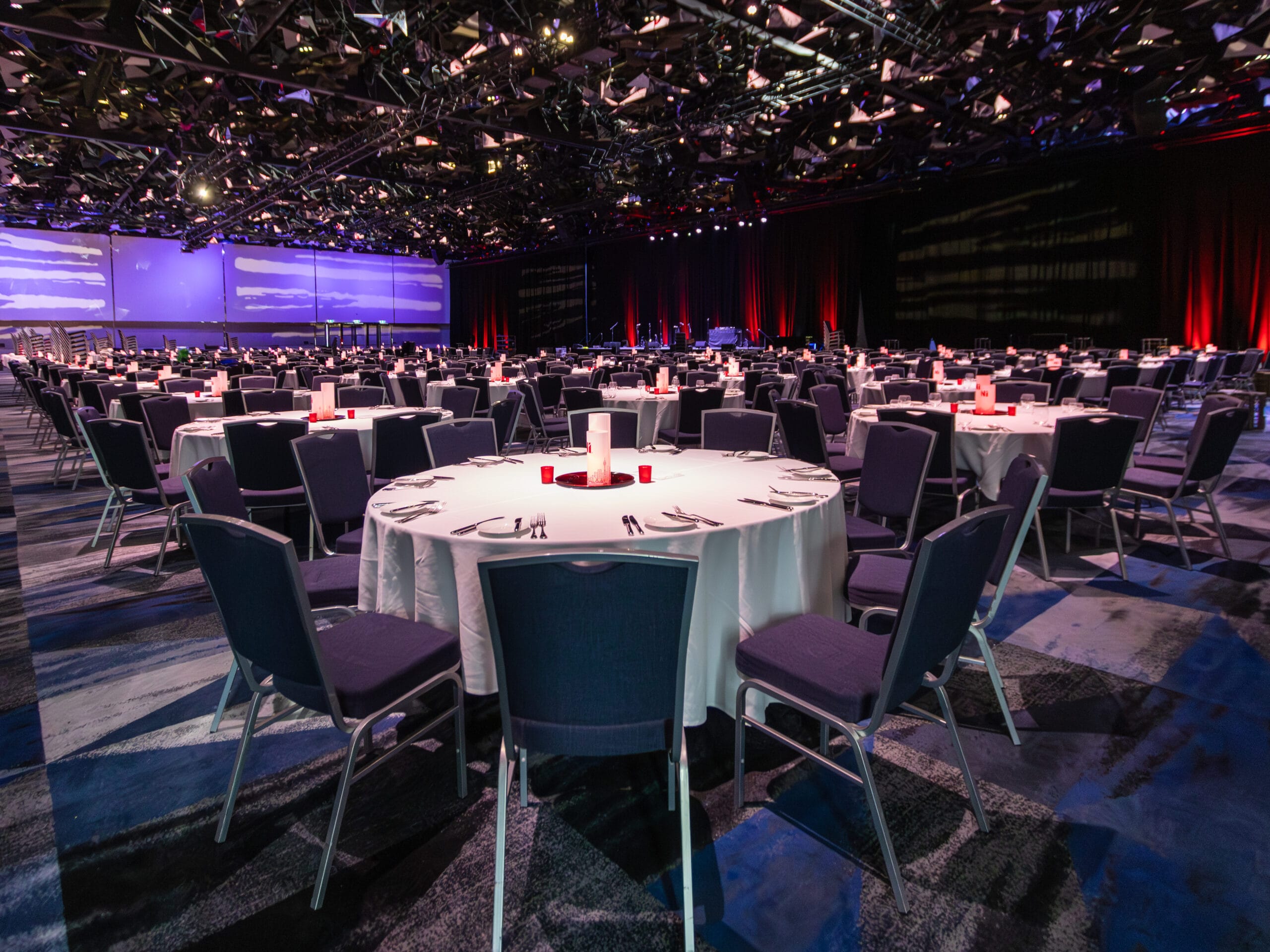
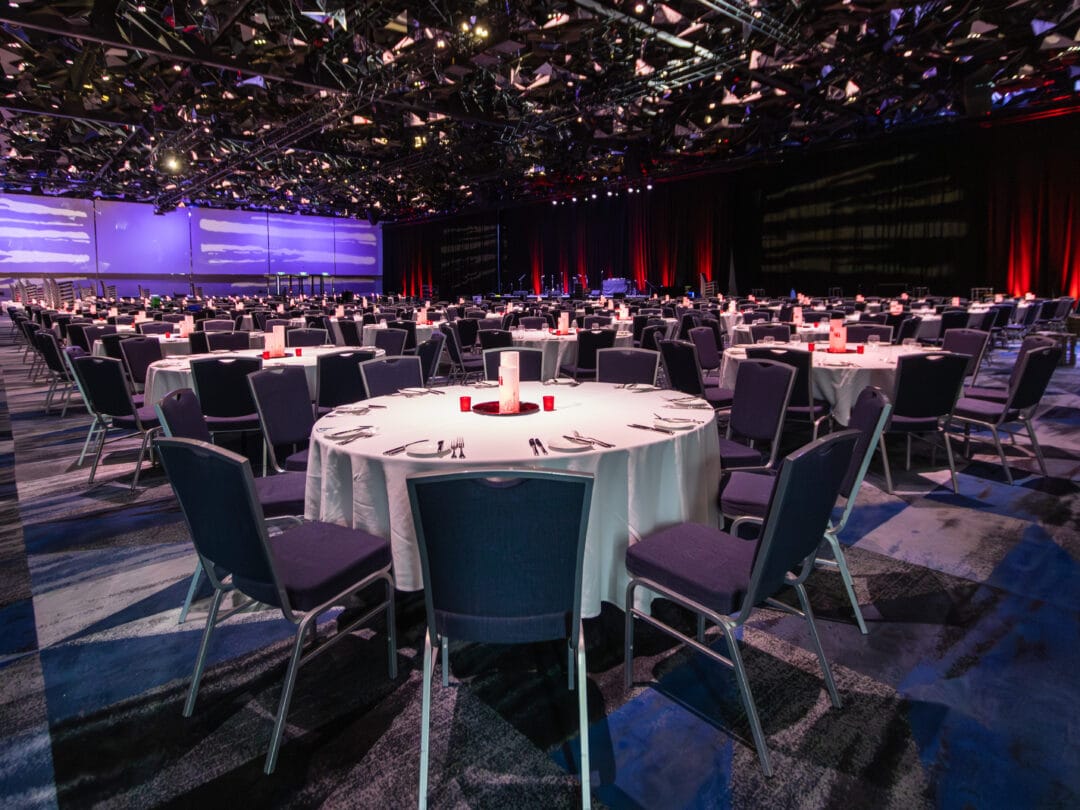
The BNI Global Gala Dinner is a strong example of brand presence working at scale. The event needed to feel polished, cohesive and memorable for a large delegate audience, so the branded environment was carried through styling, centrepieces and guest-facing details rather than relying on one isolated visual feature.
That is the difference between branding that fills space and branding that creates response. When guests can interact with the idea behind the event, the brand becomes part of the experience instead of sitting around the edges of it.
Keep Event Branding Aligned With Purpose, Format and Audience
Event branding should change with the purpose of the event. A conference needs clarity, navigation and professional consistency. A gala dinner may need atmosphere, recognition and a stronger sense of occasion. A product launch needs the brand story to be visible enough for guests to understand, photograph and share.
That is why brand decisions should be shaped by format, audience and outcome. For conference event management, branding often needs to work across multiple spaces, sessions, speaker moments and delegate communications. The identity must feel consistent without making every area look the same.
Branding priorities may shift in practical ways:
- A conference may need branded wayfinding, screen templates, sponsor areas and delegate materials
- A gala dinner may focus on room reveal, table styling, stage presence and award presentation moments
- A launch may need product storytelling, media capture points and immersive brand details
- A roadshow may require flexible assets that can adapt across venues while keeping the same identity
- A stakeholder event may need restrained, polished branding that supports credibility and confidence
The audience matters just as much as the format. Internal teams, executive guests, sponsors, clients, members and media each notice different things. Strong corporate event branding respects those expectations and makes the event feel appropriate to the people in the room.
Plan Branding as Part of Event Delivery
Event branding only works when it is planned into delivery early enough for suppliers, venues and production teams to execute it properly. A strong visual idea can lose impact if the print deadlines are missed, the stage dimensions change, the registration desk cannot support the intended layout or the digital assets are not prepared for the screen formats being used on site.
This is why branding should be included in supplier briefs, venue plans, production schedules and run sheets. It affects how guests arrive, where signs are positioned, how screens are programmed, how sponsor assets are displayed and how the room is reset between key moments. These details may feel operational, but they directly influence how polished and engaging the event feels.
Good brand delivery also needs stewardship. Consistency is not protected by design files alone, especially when multiple suppliers, internal teams and production partners are involved. Clear brand stewardship helps keep printed assets, digital files, styling elements, sponsor inclusions and on-site presentation aligned.
This is where professional corporate event management becomes important. Pink Caviar Events considers branding as part of the event environment, not as a separate design layer added at the end. The question is not only whether the branding looks good. It is whether it works in the venue, supports the guest journey and can be delivered cleanly under real event conditions.
When branding is built into the delivery process, it has a better chance of holding together on the day. Guests see a more confident event, stakeholders see a more controlled outcome, and the team behind the event has fewer loose ends to manage.
Strong Event Branding Gives Guests a Reason to Connect
Strong event branding gives guests more than a visual impression. It gives them a clearer sense of where they are, what the event stands for and how they can take part. That clarity supports engagement because people are more likely to respond when the experience feels purposeful and easy to understand.
For the host organisation, this also creates confidence. A well-branded event can support stakeholder expectations, sponsor value, audience participation and post-event recall without making the experience feel forced. The branding does not need to be loud to be effective. It needs to be intentional, consistent and connected to the event’s purpose.
When branding is planned as part of the guest journey and delivered with care, it helps the event feel more complete. Guests notice the difference, even when they cannot name every detail. They simply experience an event that feels considered, polished and worth engaging with.
Frequently Asked Questions: Event branding and guest engagement
What is event branding?
Event branding is the way an organisation’s identity, message and purpose are carried through an event experience. It can include signage, styling, screen content, printed materials, stage design, registration areas, digital communications and branded guest touchpoints.
Why is event branding important for guest engagement?
Event branding helps guests understand where they are, what the event represents and how they are expected to take part. When the event environment feels clear and connected, guests are more likely to participate, move through the event confidently and remember the experience afterwards.
How does event branding support the guest journey?
Event branding supports the guest journey by creating consistent cues from the invitation through to arrival, registration, key program moments and follow-up. These cues help guests know where to go, what to focus on and how each part of the event connects back to the host organisation.
Does event branding mean putting a logo everywhere?
No. Strong event branding is not about placing a logo on every surface. It is about using brand elements with purpose so the event feels coherent, professional and aligned with the audience, venue, format and event objective.
What are common event branding touchpoints?
Common event branding touchpoints include arrival signage, registration desks, name badges, menus, programs, stage backdrops, digital screens, sponsor displays, table details, lighting, media walls and content capture areas. The right touchpoints depend on the event format and how guests will move through the space.
How can event branding encourage participation?
Event branding can encourage participation by giving guests natural reasons to interact, share or respond. Product demonstrations, photo moments, sponsor features, interactive displays and branded installations work best when they connect to the event message rather than sitting in the room as decoration.
When should event branding be planned?
Event branding should be planned early in the event process, not added at the end. It affects supplier briefs, venue layouts, production schedules, signage placement, digital assets, sponsor inclusions and run sheets, so early planning helps protect consistency and delivery quality.
How does professional event management improve brand delivery?
Professional event management helps ensure branding is not treated as a separate design layer. Pink Caviar Events considers how branding works in the venue, supports the guest journey, aligns with suppliers and can be delivered cleanly under real event conditions.
To discuss event branding for your corporate event, conference, launch or brand-led experience, contact Pink Caviar Events on 1300 884 800 or email us. You can also fill out the form at the bottom of this page, or Book a Consultation.