Corporate events now rely on more than a venue, run sheet and supplier list. Registration platforms, check-in systems, event apps, audience engagement tools and reporting dashboards all influence how smoothly an event feels before, during and after the day itself.
The value is not in using technology for its own sake. The right tools should reduce friction, protect guest experience, give event teams clearer information and support confident decisions behind the scenes. For corporate events, that means choosing event technology that fits the event purpose, audience expectations and level of stakeholder visibility.
Why event technology needs a clear event purpose
The best event tools are chosen after the event purpose is clear. A leadership briefing, product launch, awards night and multi-day conference all place different demands on the guest journey. The technology that supports one format can create unnecessary noise in another.
Before selecting platforms or features, event teams need to understand what the event must achieve. Is the priority smooth arrivals, accurate guest data, stronger session engagement, sponsor visibility, post-event reporting or a more polished delegate experience? Each answer points to a different technology requirement.
This matters because corporate event technology is often judged in real time. Guests notice if check-in is slow. Speakers notice if Q&A is clunky. Internal stakeholders notice if reporting is incomplete. A tool that looks impressive during planning can quickly become a distraction if it does not support the way the event actually needs to run.
A clear purpose keeps the technology practical. It helps the event team choose fewer tools, configure them properly and avoid asking guests to download, scan, log in or respond unless there is a clear reason for doing so.
Registration and RSVP tools set the operational baseline
Registration is where the event starts to become operational. Before guests arrive, the event team needs accurate names, job titles, dietary requirements, accessibility notes, session choices, approval status and any guest-specific instructions that affect planning.
Well-configured event technology turns those details into useful working information. A good registration process should not simply collect responses. It should give the team a clear view of who is attending, what they need, what has changed and what still requires follow-up.
This is especially important for corporate events where guest lists are rarely static. Executives may be added late. Sponsors may need allocated places. Internal teams may request updated attendance numbers. A structured approach to event registration services helps reduce manual handling and gives suppliers more reliable information to work from.
There is also a responsibility layer. Registration forms often collect personal information, including dietary, accessibility and contact details. These details need to be handled carefully and in line with relevant privacy obligations, including the Australian Privacy Principles. For event teams, this means thinking about what information is genuinely needed, who can access it and how it will be used across planning, delivery and reporting.
Check-in tools shape the first live impression
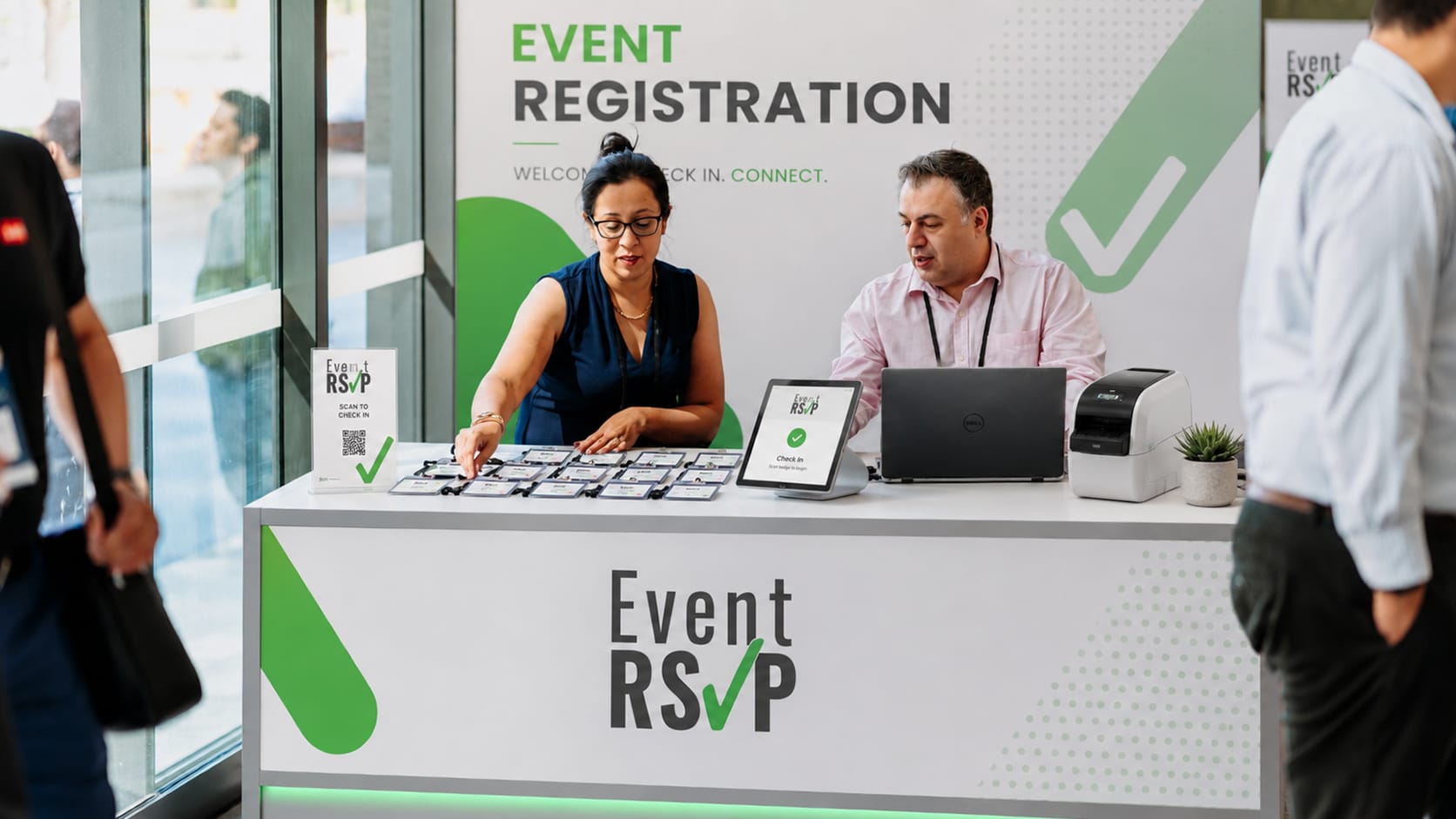
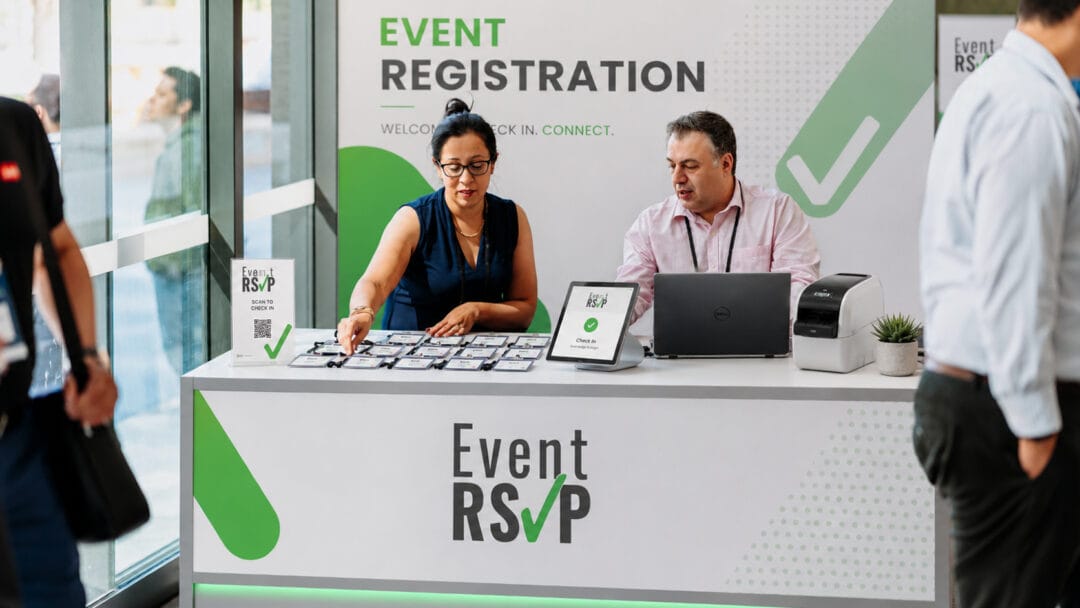
Check-in is often the first moment where guests experience the event in person. A smooth arrival creates confidence. A slow or unclear process can make even a well-planned event feel under pressure before the program has started.
Event check-in apps, QR scanning, live guest lists and badge printing can make arrivals faster and more controlled when they are set up properly. They help front-of-house teams confirm attendance, manage walk-ins, identify VIPs and respond to last-minute guest changes without relying on printed lists or scattered spreadsheets.
The practical details matter. Devices need to be charged. Internet access needs to be tested. Staff need to know what to do when a guest has no QR code, arrives under a different name or needs help with accessibility. The technology should support a calm front desk, not leave staff trying to solve system issues while guests are waiting.
For corporate events, arrival flow is not just about speed. It also affects how professional the event feels. Clear signage, trained event crew, accurate data and a reliable check-in process all work together to create a composed first impression.
Event apps and engagement tools should earn their place
Event apps can be useful when they make the event easier to navigate. Digital agendas, session reminders, speaker information, venue maps, Q&A tools and live polling can all support a better guest experience when the audience has a clear reason to use them.
The risk is adding features that guests do not need. A simple breakfast briefing may not need an app. A multi-stream conference with sponsors, breakout sessions and delegate networking may benefit from one. The format should decide the tool, not the other way around.
Engagement tools need the same discipline. Live polling can help speakers read the room. Q&A platforms can make audience participation easier, especially in larger settings. Networking tools can support introductions at conferences and industry events. But each tool adds a task for the guest, and that task needs to feel worthwhile.
For corporate audiences, ease matters. The fewer barriers between the guest and the event experience, the better. Technology should make participation simpler, not turn the event into a series of logins, downloads and instructions.
Reporting and analytics help prove event value
Once the event is over, the conversation often shifts from delivery to evidence. Who attended? Which sessions drew the strongest interest? How many registered guests did not arrive? What feedback was received? What should change next time?
Event analytics and reporting tools help answer those questions with more confidence. For conferences and larger business events, this can include attendance reports, session check-ins, engagement data, feedback survey results, lead capture reports, sponsor visibility metrics and post-event summaries for internal stakeholders.
This is where technology becomes more than an operational tool. It helps event teams explain value, identify patterns and support better planning for future events. A post-event report can show whether the event reached the right audience, where the guest flow worked well and where friction appeared.
For organisations planning complex programs, structured conference event management can bring these reporting needs into the planning process early. Pink Caviar Events considers what information will matter after the event, not only what needs to happen on the day. That makes the technology more useful because it is connected to the event’s objectives from the start.
Choose technology that supports calm, professional delivery
Event tools should make the event easier to manage, not harder to explain. The best systems give the team clearer information, give guests fewer points of friction and give stakeholders more confidence in the way the event is being delivered.
That usually comes down to fit. A small executive event may need precise RSVP tracking, discreet guest management and a polished arrival process. A conference may need registration logic, session data, app support, live engagement and detailed reporting. The technology stack should match the format, audience and level of visibility.
For organisations planning corporate events, the goal is not to use every available tool. It is to choose the right tools, configure them well and connect them to experienced corporate event management. When the planning, people and technology are aligned, the event feels calmer for the team and more seamless for the guest.
Frequently Asked Questions: Event Technology for Corporate Events
What is event technology for corporate events?
Event technology refers to the digital tools used to support planning, registration, check-in, communication, engagement and reporting. For corporate events, these tools should make delivery clearer, smoother and easier to manage behind the scenes.
What event technology tools are most useful for corporate events?
The most useful tools are usually registration platforms, RSVP systems, check-in apps, event apps, live polling tools, Q&A platforms, feedback surveys and reporting dashboards. The right mix depends on the event format, guest numbers, stakeholder visibility and reporting requirements.
How does event technology improve the guest experience?
Event technology can reduce waiting times, simplify registration, provide clear event information and make it easier for guests to participate. When it is configured well, guests experience fewer points of friction from invitation through to arrival and follow-up.
Do all corporate events need an event app?
Not every corporate event needs an event app. A small boardroom briefing may only need accurate RSVP management and a smooth arrival process, while a conference with multiple sessions may benefit from an app with agendas, speaker details, maps and engagement tools.
Why is registration technology important for corporate events?
Registration technology helps event teams collect accurate attendee information, manage guest changes and prepare suppliers with the right details. It also supports better planning around dietary requirements, accessibility, session numbers and post-event reporting.
What should event teams consider before choosing event technology?
Event teams should start with the event purpose, audience needs, format, guest journey and reporting expectations. Technology should solve a real operational need rather than add extra steps for guests or create more administration for the team.
How can event technology help with check-in?
Check-in technology can help confirm attendance, manage guest lists, print badges and reduce manual searching at the front desk. It works best when the system is tested, staff are trained and there is a clear process for late changes, missing QR codes or unexpected arrivals.
How does event technology support post-event reporting?
Event technology can provide data on registrations, attendance, session participation, engagement, feedback and no-shows. These insights help teams understand what worked, report to stakeholders and make better decisions for future events.
How does Pink Caviar Events use event technology in corporate event planning?
Pink Caviar Events uses event technology as part of a broader event management process. The focus is on choosing tools that support the guest journey, event operations, stakeholder visibility and calm professional delivery, rather than using technology for its own sake.
To discuss event technology for your corporate event, contact Pink Caviar Events on 1300 884 800 or email us. You can also fill out the form at the bottom of this page, or Book a Consultation.